Influence of MgFe₂O₄ on the magnetic properties of glass-Ceramics derived from sol-gel synthesis
Magnetic glass-ceramics are composed of a magnetic phase, usually an iron oxide, integrated in a glass matrix. When bioactive glass is used as the matrix, these materials not only exhibit remarkable magnetic properties, but also acquire bioactivity properties. Among iron oxides, those incorporating magnesium, an essential cation in the human body stands out due to their impact on various metabolic processes. This addition enhances the properties of the glass-ceramics, providing superior biocompatibility, superparamagnetic behavior, and efficiency in induction heating, making them ideal for medical applications such as magnetic hyperthermia.
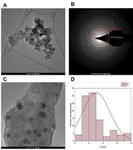
In this study, magnetic glass-ceramics with 5, 10, 15, and 20 wt% of MgFe₂O₄ were synthesized using the sol-gel method. In order to evaluate the effect of the percentage of MgFe₂O₄ addition on the magnetic properties. The materials obtained were characterized using XRD, FTIR, VSM, and TEM. XRD and FTIR analyses revealed the presence of the MgFe₂O₄ phase and the formation of the hydroxyapatite phase. Hysteresis curves demonstrated superparamagnetic behavior, with a saturation magnetization of 7.95 emu/g in the samples containing 20% MgFe₂O₄. TEM analysis identified nanoparticles with spherical morphologies, with an average particle size of 6.10 nm.
Keywords: Ferrites, MgFe2O4, Sol-Gel, Glass-ceramics.


