Magnesium ferrite nanoparticles as cancer treatment adjuvants: synthesis, characterization, and heating capacity
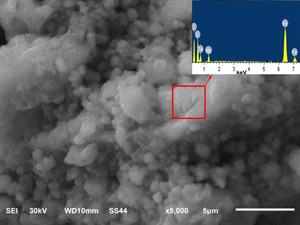
A microemulsion wet synthesis method was employed to obtain magnetic nanoparticles with the general formula MgxFe3-xO4, where x = 0.2, 0.4, 0.6, 0.8, and 1. After evaluating the magnetic properties and heating capacity of the synthesized powders, it was found that the most suitable results correspond to the values of x = 0.8 and 1. XRD analysis revealed a spinel structure corresponding to the pure phase of MgFe2O4, formed due to magnesium metal cations (Mg2+) replacing iron metal ions (Fe3+ - Fe2+). Using the SEM-EDX technique, aggregates of nanoparticles ranging from 5 to 20 µm were found (heat treatment at 900 °C). The results of the TGA-DSC analysis indicated a 50% loss of the precursor material and showed the onset of crystalline phase formation at 500 °C. TEM analysis confirms the presence of the MgFe2O4 phase, with a spherical morphology and an average particle size of 31 nm. VSM analysis demonstrated superparamagnetic behavior, where the maximum saturation magnetization value found in the nanoparticles (MgFe2O4) was 18.52 emu/g. The solid-state magnetic induction test revealed that using 6.0 mg of nanoparticles per ml of solution allows the temperature of the medium (H2O) to rise to 44.32 °C in less than 10 minutes. Cytotoxicity levels for erythrocyte cells in the presence of magnesium ferrites were up to 60 hours higher than 50% and very close to the control used. Based on the results, these nanoparticles could be effective in cancer treatment through magnetic hyperthermia therapy, as they can reach temperatures that induce thermal instability in proteins and nutrients in the affected area, leading to the death of neoplastic cells. Unlike normal cells, cancer cells exhibit greater sensitivity to temperature variations.
Keywords: Ferrites, Hyperthermia, Microemulsion, Nanoparticles, Superparamagnetic.